
Yarnation: Unravel Flow
Unico Games StudioPuzzle
4.6388.00 Reviews
- Version
- 1.001
- Installs
- 100.00K
- Age Rating
- Everyone
Screenshots
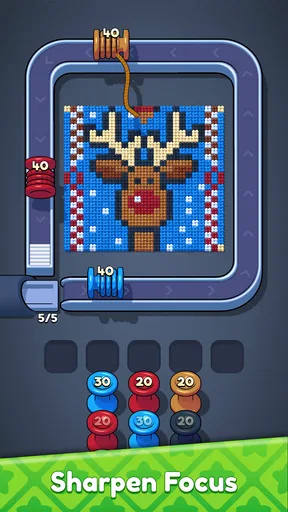
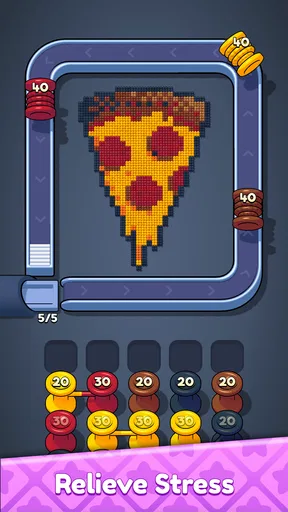
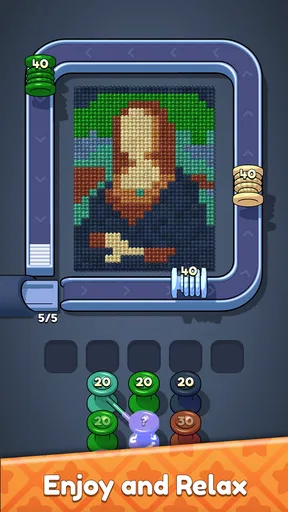
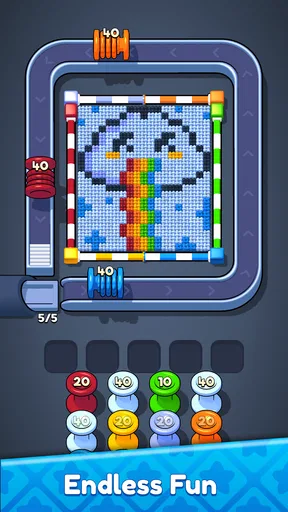
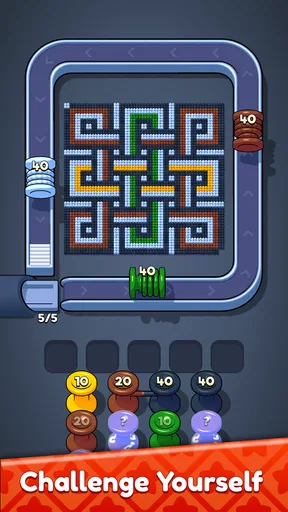
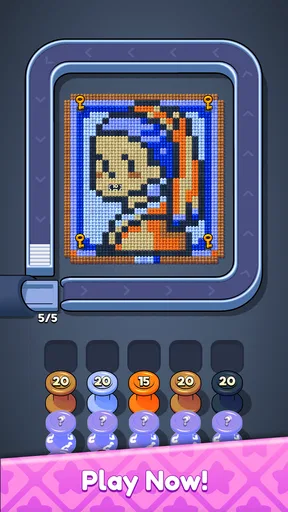
Our Review of Yarnation: Unravel Flow
 Analysis by Appyee
I approached Yarnation: Unravel Flow as the kind of puzzle game I could open for a few quiet minutes and then return to later without having to rebuild a complicated story in my head. Its central idea is easy to understand: sort and untangle knitted patterns by working with yarn. That gives it an immediately tactile identity, even though the activity happens on a screen. The important question is not whether the premise sounds pleasant; it is whether the puzzle structure gives you enough thought and variety to justify keeping it installed.
After spending time with it, my answer is generally yes, with an important qualification. This is best suited to players who enjoy visual organization, gradual problem solving, and a calm rhythm rather than dramatic action. It is a free puzzle game from Unico Games Studio, rated for Everyone, and it has already reached over one hundred thousand installs with a 4.6 average from around three thousand ratings. Those figures suggest that the accessible concept is connecting with a substantial audience, but they do not replace the more personal question: do you like puzzles where the satisfaction comes from making a messy arrangement readable?
How I would decide whether this puzzle style suits you
The first decision criterion is the kind of concentration you want. Some puzzle games demand rapid reactions, precise timing, or memorization. Yarnation: Unravel Flow leans toward inspection. I found myself looking at the visible yarn relationships, deciding which strand or color seemed safe to handle first, and then checking whether that choice opened a cleaner route through the rest of the pattern. That makes it a comfortable choice for a break, a commute, or a short session before bed, provided you prefer deliberate decisions over constant stimulation.
The second criterion is tolerance for repetition. A sorting puzzle can feel satisfying when each move reduces confusion, but the same basic mental action can become predictable if you want a constantly changing rule set. I would not choose this game expecting the broad range of mechanics found in a large puzzle collection. Its appeal comes from refining one recognizable idea: bringing order to knitted arrangements. If that focused loop sounds appealing, the simplicity works in its favor. If you need new systems every few minutes, a more varied alternative may hold your attention better.
I also considered how much visual clarity matters. In a yarn-based puzzle, the arrangement itself is the challenge, so the screen needs to communicate what belongs together and what is blocking progress. I recommend playing with enough brightness to distinguish nearby colors, especially when several strands sit close together. This is a small practical point, but it changes the experience: when I could read the pattern quickly, I was solving; when I had to squint at it, I was fighting the presentation instead.
Another useful criterion is how you respond to mistakes. The best way to approach this game is not to make every move as quickly as possible. I had better results when I paused before committing to a move and looked for the strand that would expose the most useful information. That habit turns the game from random tapping into a process of controlled discovery. Players who enjoy planning one or two steps ahead will probably get more from it than players who prefer guessing and immediately restarting.
The appeal of turning visual clutter into a plan
What makes the concept work for me is the contrast between the starting arrangement and the finished one. Knitted patterns naturally suggest texture, loops, and interdependence, so separating them feels more concrete than matching anonymous tiles. I could see progress even before a puzzle was complete: a blocked section became readable, a color group became easier to trace, or one awkward strand stopped interfering with everything around it.
That visual progress is also why I think the game can work for casual players who do not normally describe themselves as puzzle fans. You do not need to learn a fictional world, remember characters, or understand a complicated control scheme before beginning. The basic objective is approachable, while the challenge comes from choosing an efficient order. For a family setting, the Everyone rating makes the game broadly accessible, although younger players may still need help understanding why a tempting move creates trouble later.
My most useful tactic was to treat the board as a set of dependencies rather than a collection of individual strands. I looked first for the pieces that seemed to sit on top of or across other pieces, then considered whether moving them would reveal a larger section. This is more reliable than chasing the most attractive color. A bright or familiar strand is not necessarily the correct first move; the best move is often the one that reduces the number of future obstructions.
A second tip is to preserve flexibility. When I had two possible places to begin, I preferred the move that left more open options afterward. In practical terms, that means avoiding a sequence that immediately funnels several remaining strands into one narrow choice unless the pattern clearly demands it. This approach may sound obvious, but it is the difference between calmly solving a layout and creating a position where every later move feels forced.
A third insight is that the game rewards a short visual reset. If I became stuck, repeatedly staring at the same arrangement usually made the puzzle feel more complicated. Looking away for a moment and returning with the goal of identifying only the most constrained area helped me separate genuine difficulty from visual overload. That makes Yarnation: Unravel Flow a surprisingly good fit for short sessions: stopping does not feel like abandoning a long narrative, and returning does not require remembering a plot.
Where this game wins against familiar puzzle alternatives
Compared with match-three games, this feels less dependent on quick pattern recognition and more dependent on sequencing. Match-three games often give immediate feedback and encourage a flowing chain of actions. Here, I get more satisfaction from finding the correct order than from building a fast streak. That difference matters if you want a puzzle that lets you slow down and examine a problem instead of constantly reacting to the next opportunity.
Compared with word puzzles, the challenge is visual and spatial rather than language-based. That makes it a better choice when I want to play without searching for vocabulary or interpreting clues. It also means that players who enjoy wordplay, trivia, or deduction through written hints may find the yarn presentation less mentally rich. Neither approach is universally better; they exercise different kinds of attention.
Compared with physics puzzles, Yarnation: Unravel Flow appears more orderly in spirit. The pleasure comes from sorting and revealing structure, not from experimenting with simulated objects or trying to predict momentum. I would pick a physics game when I wanted surprising outcomes and playful trial and error. I would pick this one when I wanted the board to become progressively more understandable through careful choices.
Its strongest advantage over many generic sorting games is the knitted presentation. The theme is not merely a label placed over interchangeable shapes; it gives the sorting task a visual reason to exist. I found the idea of untangling a pattern more inviting than arranging plain blocks. That thematic coherence is valuable for players who lose interest when a puzzle feels like an abstract exercise with no personality.
Still, the focused concept is also its main limitation. If your favorite puzzle games constantly introduce new rules, special pieces, or dramatic changes in pace, this may feel narrow. I would not switch from a deep logic game solely because this one is free. I would switch when I specifically wanted a gentler, more immediately readable activity that I could understand without a tutorial-heavy commitment.
Who should choose another category instead
I would steer action-oriented players elsewhere. Nothing about the yarn-sorting premise suggests that it is designed to provide the pressure of an arcade game, the tactical tension of a competitive title, or the emotional momentum of an adventure. If your ideal mobile session involves fast controls and constant motion, the calm sorting loop may feel slow rather than relaxing.
I would also be cautious about recommending it to someone who dislikes visual organization tasks. The game’s identity is tied directly to identifying relationships among strands and patterns. If you find it frustrating to inspect a crowded arrangement or plan around blocked pieces, the theme will not rescue the underlying puzzle. A word game, trivia title, or simple matching game may be a better everyday companion in that case.
Players who want a completely uninterrupted free experience should also think about the commercial model before committing. The game is free to download, but it includes in-app purchases ranging from $1.99 to $89.99 per item. That does not automatically make the game poor value, and I would not assume that spending is necessary to enjoy its basic premise. However, the range is significant enough that I would treat purchases as an optional decision to make deliberately, not something to tap through casually during a difficult moment.
My practical advice is to play without spending first and decide whether the core loop genuinely earns more of your time. If you enjoy the puzzles, set a personal limit before exploring any optional purchase. This is especially useful for a casual game aimed at Everyone, because a relaxed session can make an impulse purchase feel harmless even when the highest listed item is much larger than a typical snack-sized mobile expense.
What changes when you move from another puzzle game
The cost of switching to Yarnation: Unravel Flow is low in terms of learning. You do not need to carry over knowledge from another game, master a complicated control layout, or understand a large set of systems before seeing what it offers. I could approach it with the same general habits I use in other sorting puzzles—scan the board, identify dependencies, and avoid closing off options—but the yarn theme makes the visual reading feel distinct.
The bigger switching cost is psychological. If you are used to immediate rewards, rapid rounds, or a constant stream of new challenges, you may initially interpret its measured pace as a lack of energy. I found it more useful to judge it by a different standard: does each move make the pattern clearer, and do I enjoy that gradual reduction of disorder? Once I asked that question, the game made more sense. It is not trying to replace every kind of puzzle; it is offering a particular mood and form of concentration.
There is also a device-related consideration. The game supports Android devices running version 6.0 or later, and its current version is 1.001. That makes it relevant to people using older compatible Android hardware, though I would still keep expectations realistic about how comfortable a small screen will be for inspecting tightly arranged yarn. A larger display can make visual planning easier, while a compact phone is convenient for quick sessions. The trade-off is readability rather than complexity.
For someone moving from a conventional sorting game, I suggest changing the way you measure progress. Do not focus only on how many moves you make. Watch for whether the board becomes easier to read after each decision. A move that exposes a previously hidden relationship can be more valuable than one that visibly places a strand in a nearly finished group. This mindset makes the knitted patterns feel like problems to decode instead of chores to clear.
The game is also easy to recommend in a shared household because its age rating is Everyone and its premise is understandable at a glance. I can imagine handing the phone to a younger family member and discussing the next move together without needing to explain a story or complicated character abilities. The limitation is that cooperative conversation does not remove the underlying need for patience; children who want instant feedback may still prefer a faster matching game.
My recommendation after weighing the trade-offs
I recommend Yarnation: Unravel Flow to players who want a free, approachable puzzle centered on sorting knitted patterns and making careful choices. The strongest use case is a short daily break: I can open it while waiting, solve a focused section, and put it down without feeling that I have interrupted a larger adventure. It is also a good fit for anyone who enjoys the satisfaction of transforming visual clutter into a clean arrangement.
I would skip it if your priority is speed, deep narrative, competitive play, or a wide rotation of unrelated puzzle mechanics. I would also avoid treating the free download as permission to spend casually. The in-app purchase range deserves attention, particularly for families sharing a device. Enjoy the basic game first, then decide whether any optional purchase fits your own budget and habits.
Unico Games Studio has chosen a specific lane rather than trying to cover every puzzle style, and that focus is what gives the game its character. The knitted setting makes the central task feel warmer and more distinctive than plain color sorting, while the deliberate pace gives each decision room to matter. The trade-off is that players seeking constant novelty may find the experience too concentrated.
For me, the final decision is straightforward: install it if “quietly untangling a visual problem” sounds more appealing than chasing a high score or reacting under pressure. Its 4.6 average and over one hundred thousand installs show that the idea has found an audience, but my recommendation rests on the play style rather than the popularity. Choose it for calm, visual planning; choose another puzzle category when you need speed, story, or constant mechanical surprise.
Verdict
Strengths of Yarnation: Unravel Flow
- Relaxing flow puzzles are easy to learn and satisfying to complete.
- Minimalist visuals keep the board clear and the gameplay focused.
- Short levels make it suitable for quick breaks or casual sessions.
- Increasing complexity provides a steady challenge without feeling overwhelming.
- Offline play makes it convenient when you have limited connectivity.
Limitations of Yarnation: Unravel Flow
- Some puzzles may feel repetitive after extended play sessions.
- The difficulty curve can be uneven between certain levels.
- Limited game modes may reduce long-term variety for experienced players.
- Hints or assistance may be restricted, depending on the level.
- Ads can interrupt the experience for users on the free version.
Other Releases by Unico Games Studio
View All
Paint Loop: Pixel Puzzle
Puzzle4.7
Similar Picks in This Category
View All
Block Blast!
HungryStudio4.8

Braindom: Brain Games Test
Lahana Game Studio4.6

AMAZE!
CrazyLabs LTD4.6

Sudoku - Classic Sudoku Puzzle
Oakever Games4.7

Art Puzzle - Puzzle Games
Easybrain4.8

Amaze GO!
Oakever Games4.9
Frequently Asked Questions
What is Yarnation: Unravel Flow, and how is the gameplay structured?
Yarnation: Unravel Flow is a puzzle game centered on untangling and organizing flowing paths. You interact with connected lines or routes and work out how to separate, redirect, or arrange them correctly. The experience is designed around observation, planning, and gradual problem-solving rather than fast reflexes, making it suitable for players who enjoy calm, logic-focused challenges with progressively more complicated stages.
Is Yarnation: Unravel Flow easy to learn for new players?
Yes, the basic concept is generally approachable because the game focuses on simple visual interactions and clear puzzle objectives. Early levels help you understand how the flow system works before introducing more difficult layouts. However, later puzzles can require patience and several attempts, especially when multiple paths overlap or when a solution depends on moving elements in a particular order.
Does Yarnation: Unravel Flow work offline?
The core puzzle experience may be playable without a constant internet connection, which is useful when traveling or when mobile data is limited. Nevertheless, some features can still depend on connectivity, including advertisements, analytics, updates, cloud-related functions, or store verification. For the most reliable experience, it is recommended to launch the game once while online and check its current requirements on your device.
Is Yarnation: Unravel Flow free to download, and does it contain ads or purchases?
The game can typically be downloaded at no initial cost, but free mobile games may include advertising, optional purchases, or both. Ads can sometimes appear between levels or after completing an action, while purchases may offer ways to remove advertisements, obtain hints, or access additional content. Check the Google Play Store or App Store listing before installing because pricing and monetization options can change.
Which devices are compatible with Yarnation: Unravel Flow?
Compatibility depends on the version available for Android or iOS, as well as your device’s operating system, processor, and available storage. Puzzle games usually run well on many modern phones and tablets, but older hardware may experience slower loading or visual limitations. Before downloading, review the official store page for the minimum Android or iOS version and make sure you have enough free space for installation and updates.
Play our best games!


